
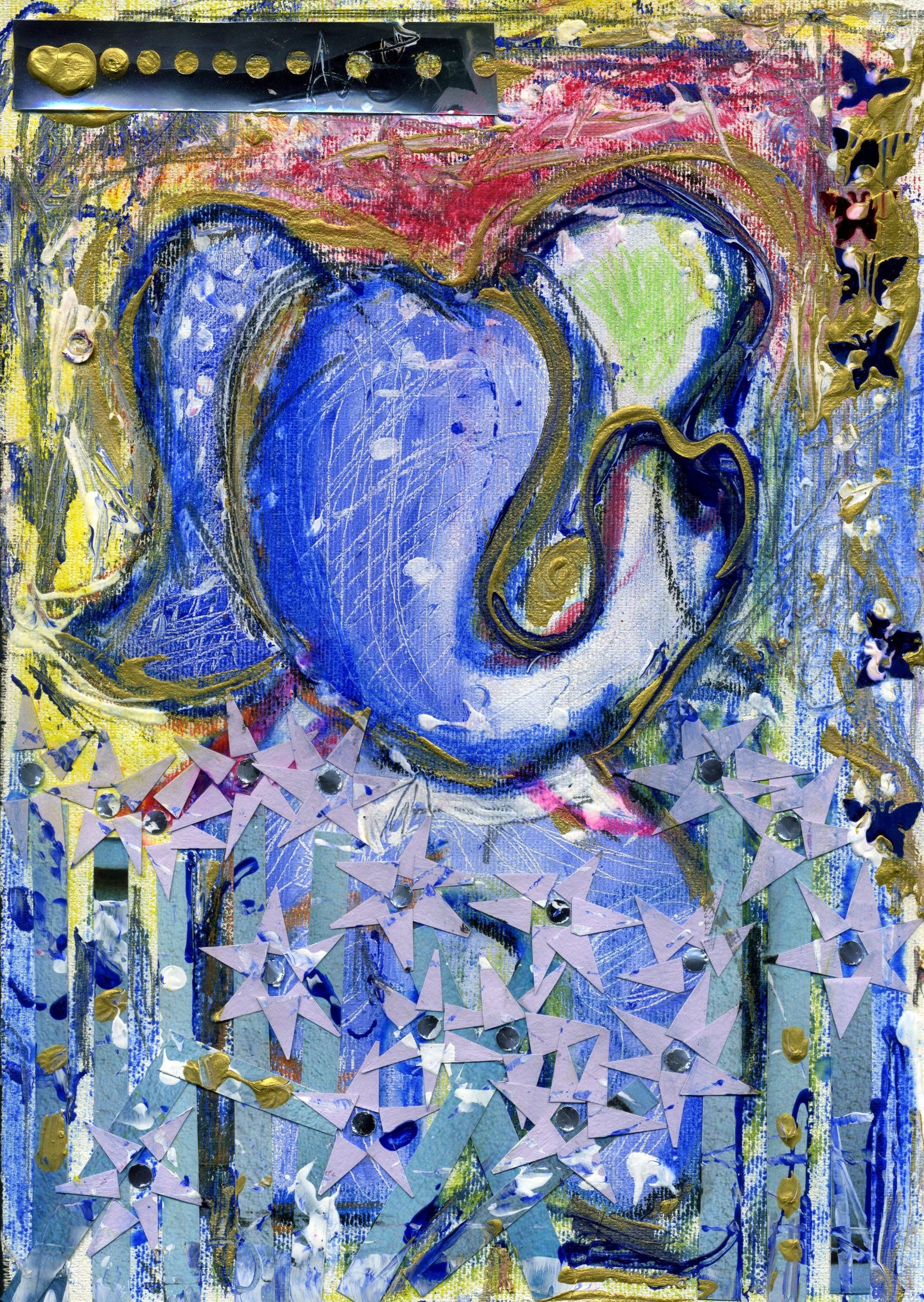
SKY-BLUE ELEPHANT IN A FIELD OF FLOWERS
Acrylic, cardboard, plastic and wax on canvas In the early 2000s the artist experimented with a range of techniques, styles and materials to portray the elephant. Only the head of this elephant stands out; the whole lower part is worked in blue and greenish tones, a combination of various collages in the shape of tall flowers camouflaging the body. The upper background of the canvas shows yellowish tones, evoking a sunset sky. The artist's signature is on the back of the canvas.
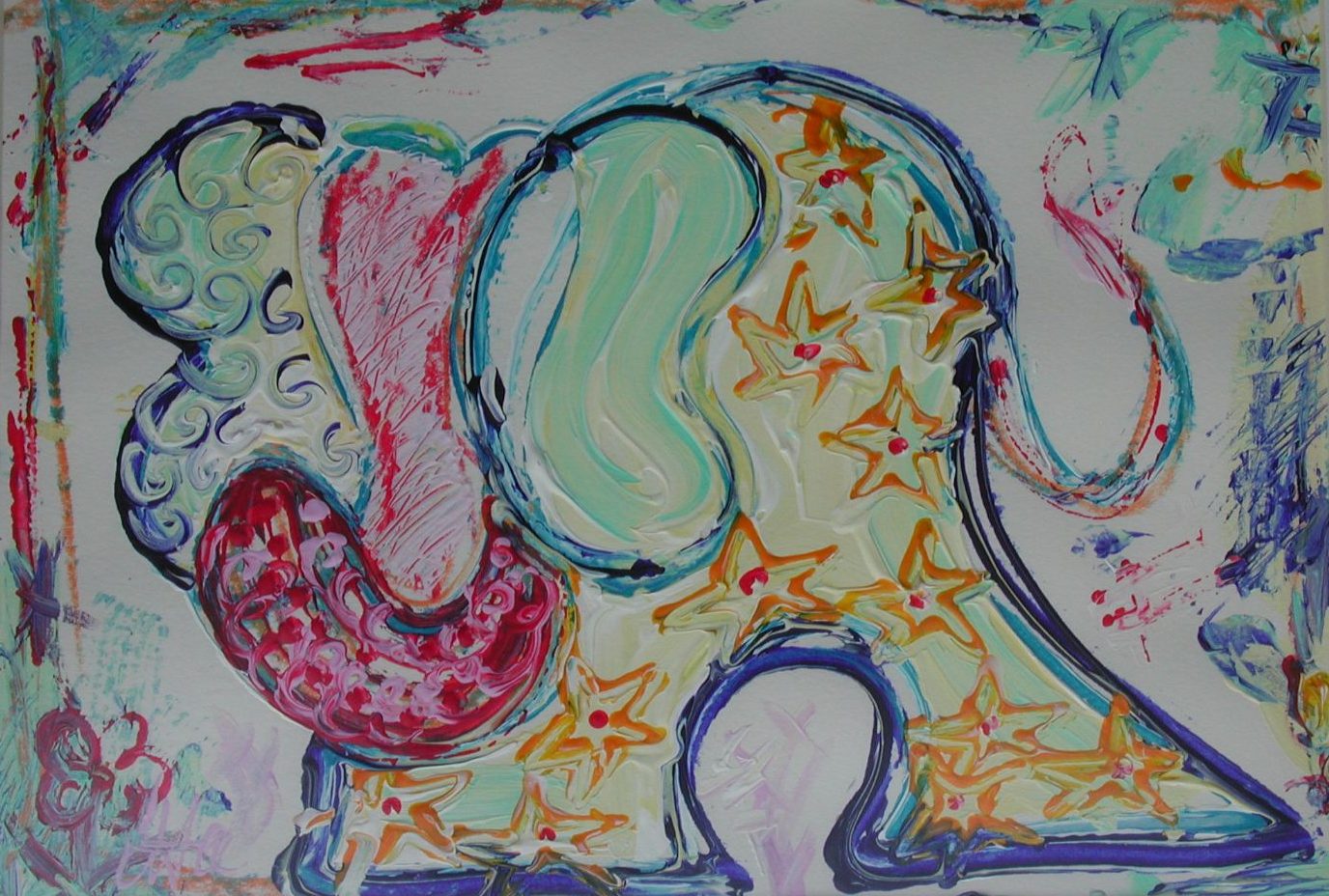
ELEPHANT WITH STARS
Acrylic and wax on paper In the early 2000s the artist experimented with a range of techniques, styles and materials to portray the elephant. A simple, multicoloured silhouette in pastel tones, with generously applied acrylic and a few wax strokes. Signed in pink acrylic at the lower left and in pencil on the back.
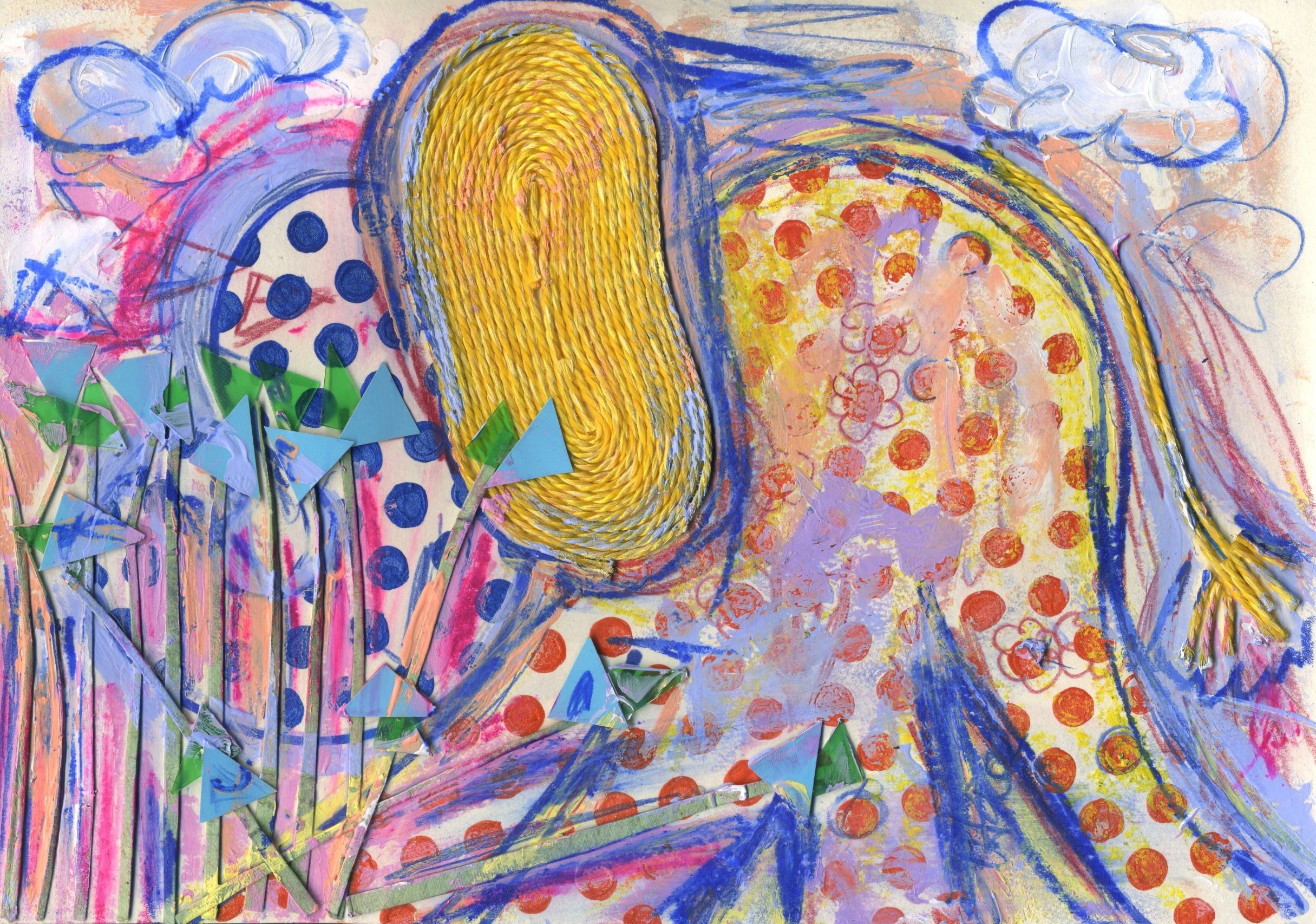
ELEPHANT WITH YELLOW EARS
Acrylic, coloured pencil, thread, cardboard and plastic on paper In the early 2000s the artist experimented with a range of techniques, styles and materials to portray the elephant. First the artist draws a classic elephant silhouette with blue and orange polka dots. A collage of yellow thread shapes the ear that gives the work its name. The artist then hides the front of the animal behind a collage of tall plants, creating the feeling of an elephant completely at ease. The artist's signature appears both at the lower right and on the back.
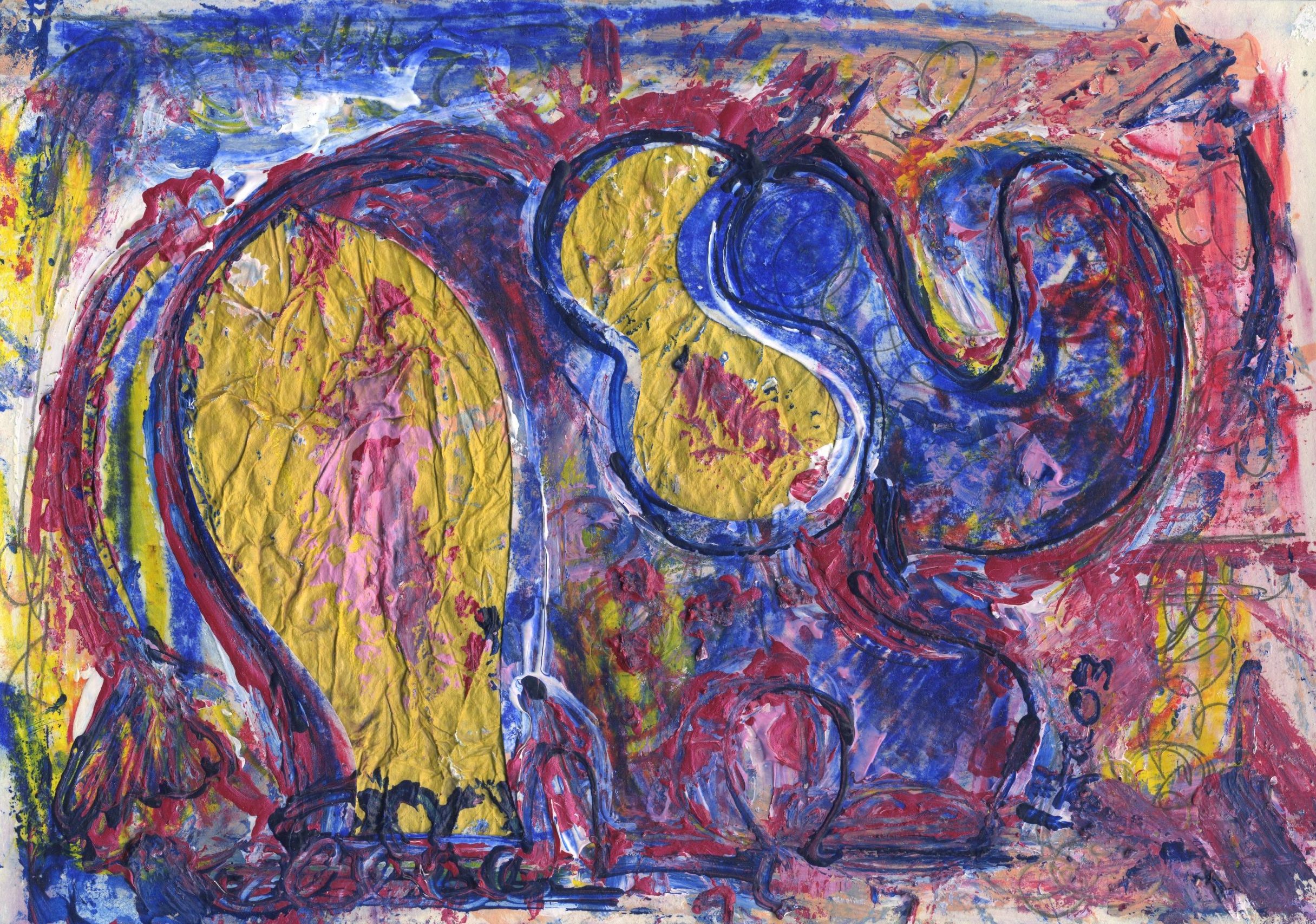
ELEPHANT OUT FOR A STROLL
Acrylic, wax and coloured pencil on cardboard In the early 2000s the artist experimented with a range of techniques, styles and materials to portray the elephant. The ear and hind leg of this elephant are cut out and filled with crumpled yellow paper. The work is in strong blue and red, applied in several layers of acrylic and wax. Made in 2003, this is one of the most colour-laden interpretations.
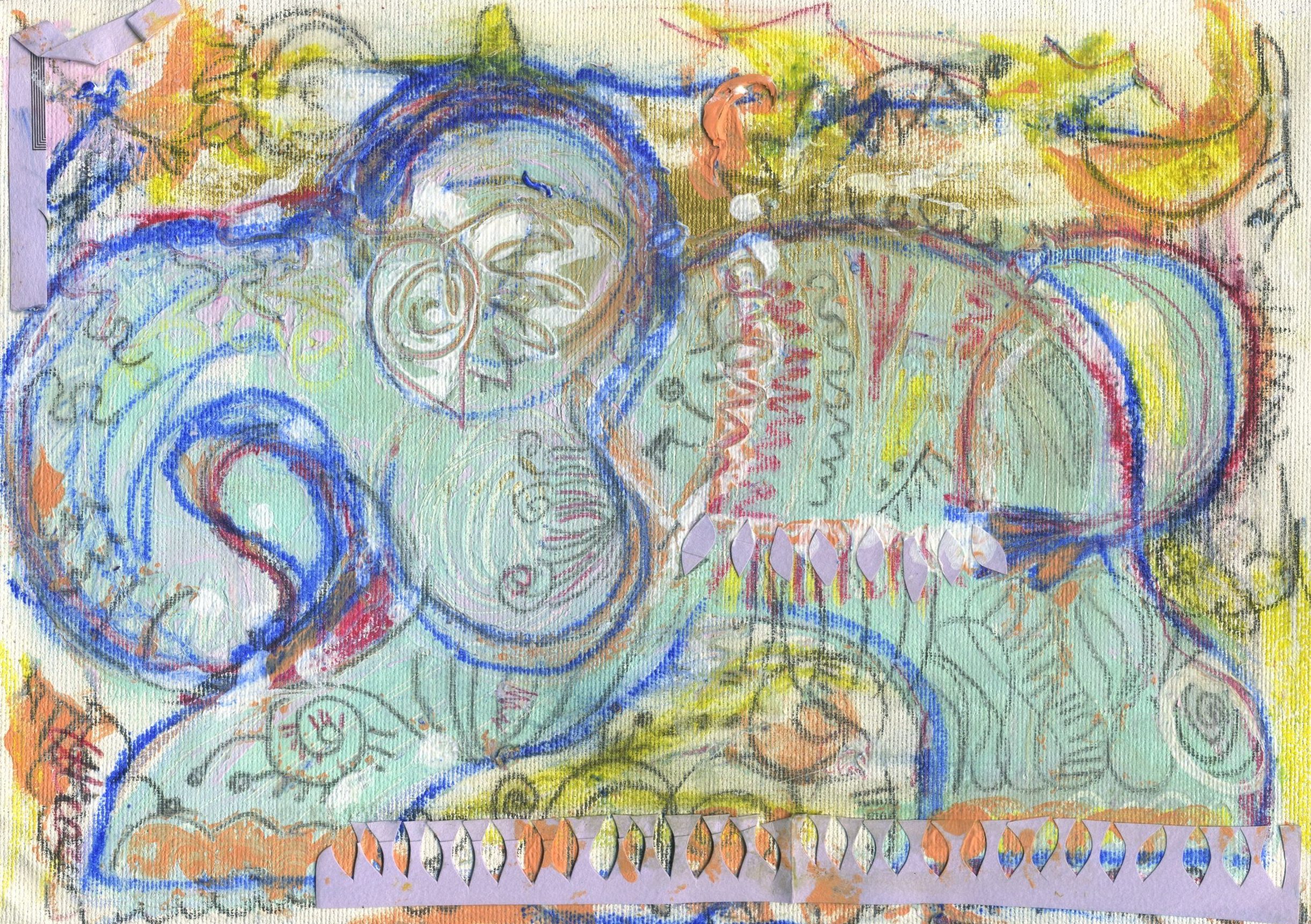
ELEPHANT IN TURQUOISE
Pencil, coloured pencil, acrylic, wax and cardboard on canvas In the early 2000s the artist experimented with a range of techniques, styles and materials to portray the elephant. On canvas, painted with wax and acrylic, a light greenish elephant. Numerous pencil details make the animal partly disappear. This 2003 canvas is signed on the front and on the back.
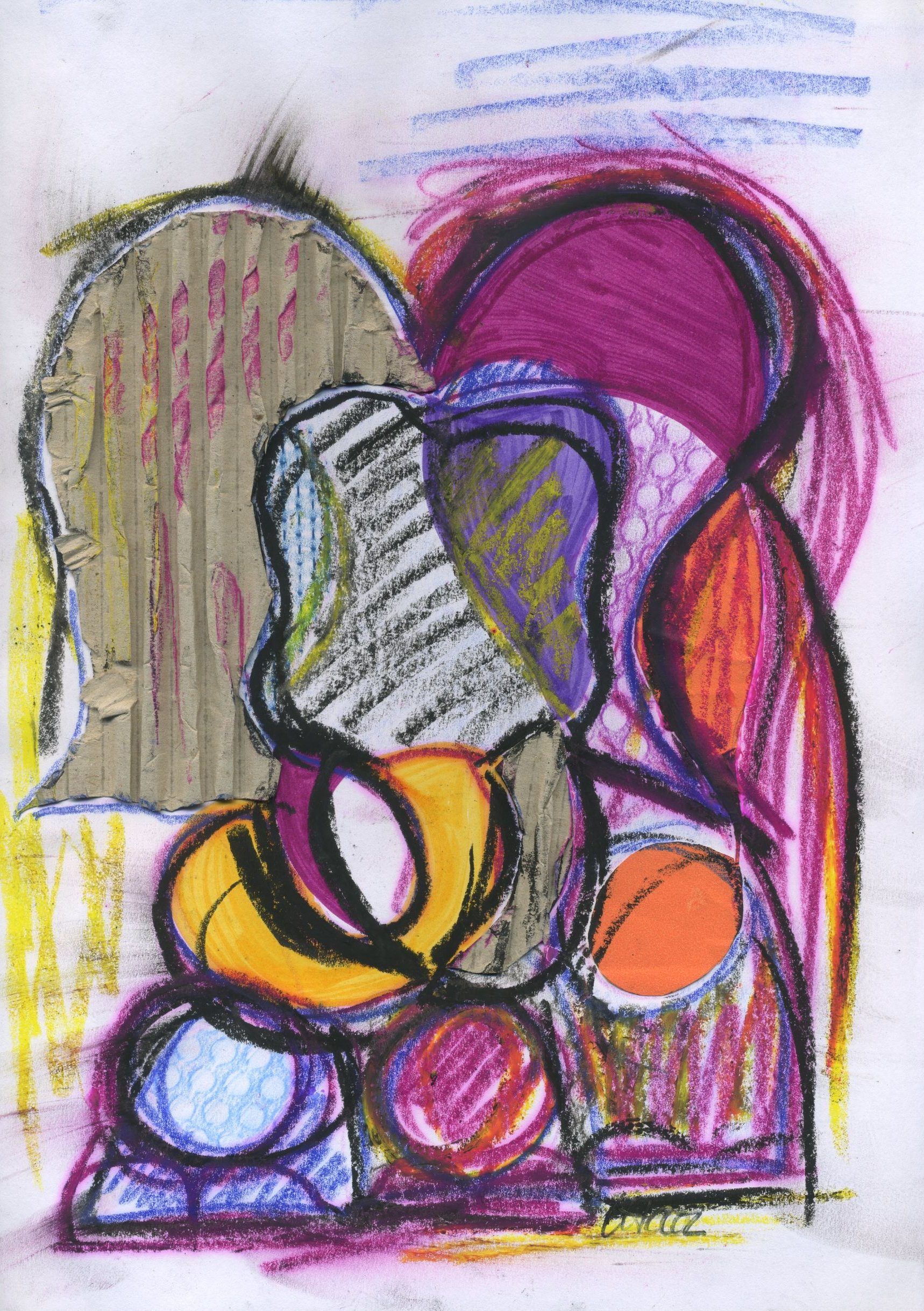
ELEPHANT GAZING
Wax, coloured pencil, tissue paper and corrugated cardboard on paper In the early 2000s the artist experimented with a range of techniques, styles and materials to portray the elephant. With a generous black line the artist outlines a very attentive elephant facing the viewer. Strong colours and collage in places reinforce the sense of a very present animal. The work is signed on both sides of the sheet.
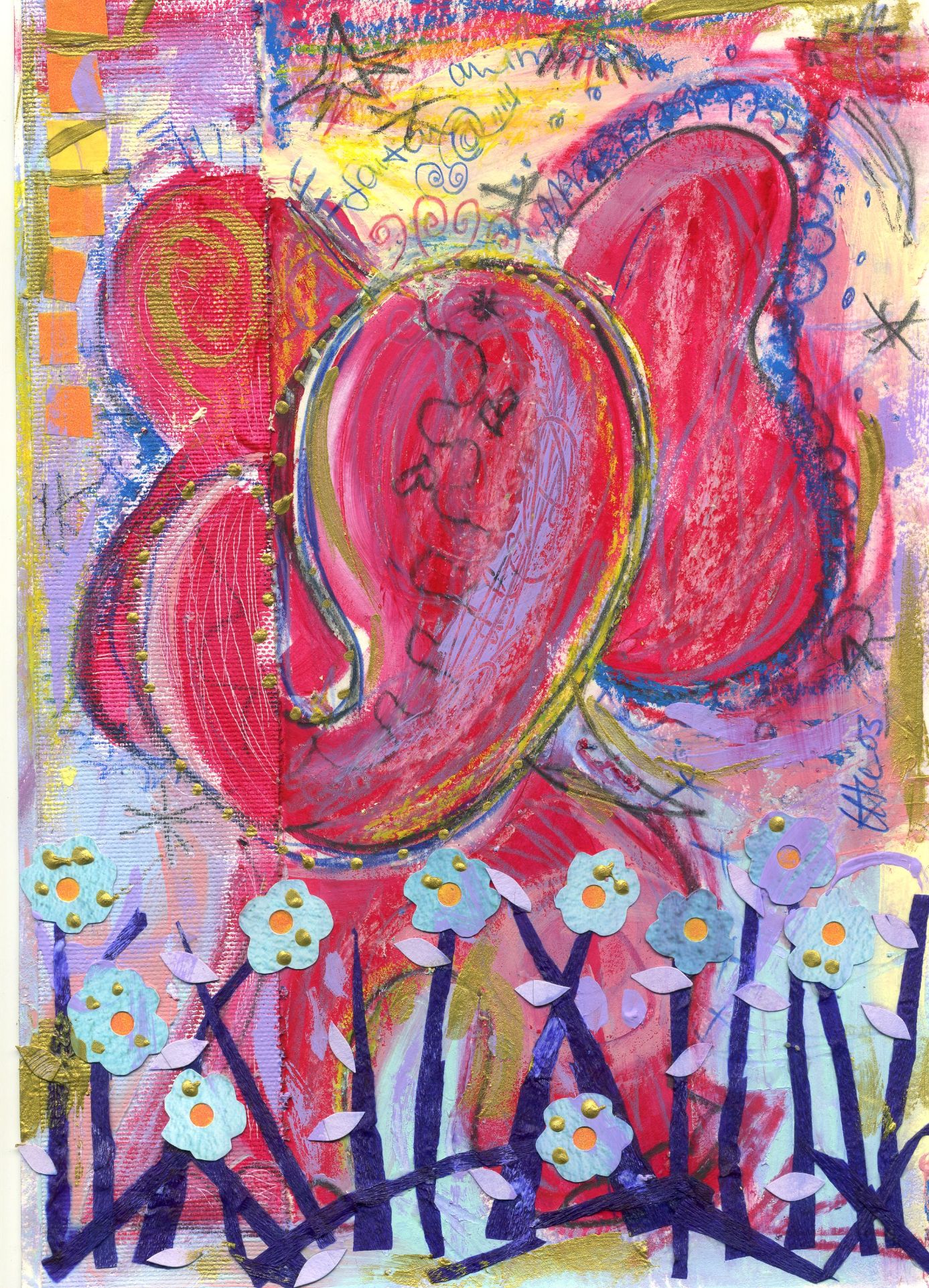
RED ELEPHANT IN A FIELD OF FLOWERS
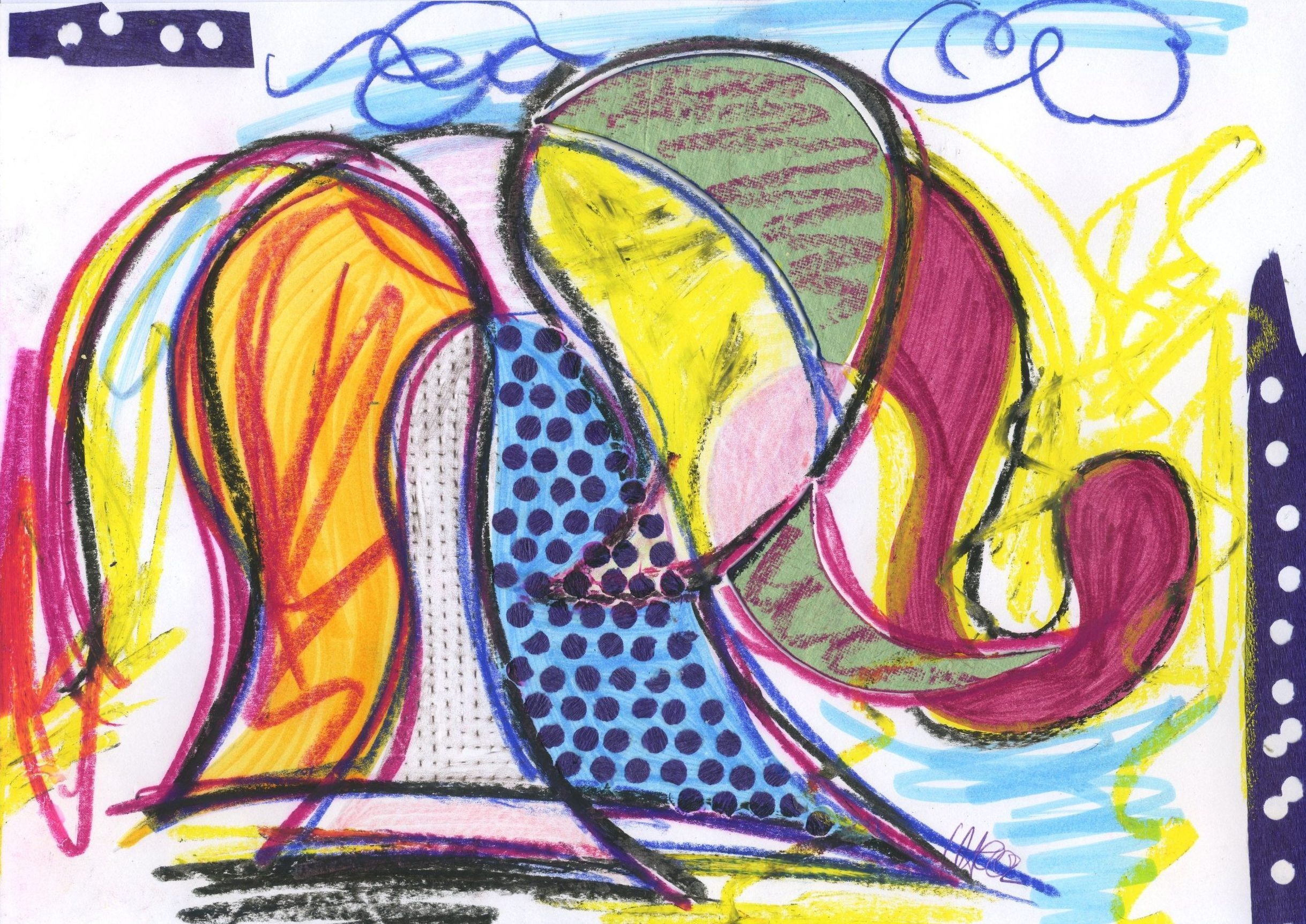
ELEPHANT, PINK IN PARTS
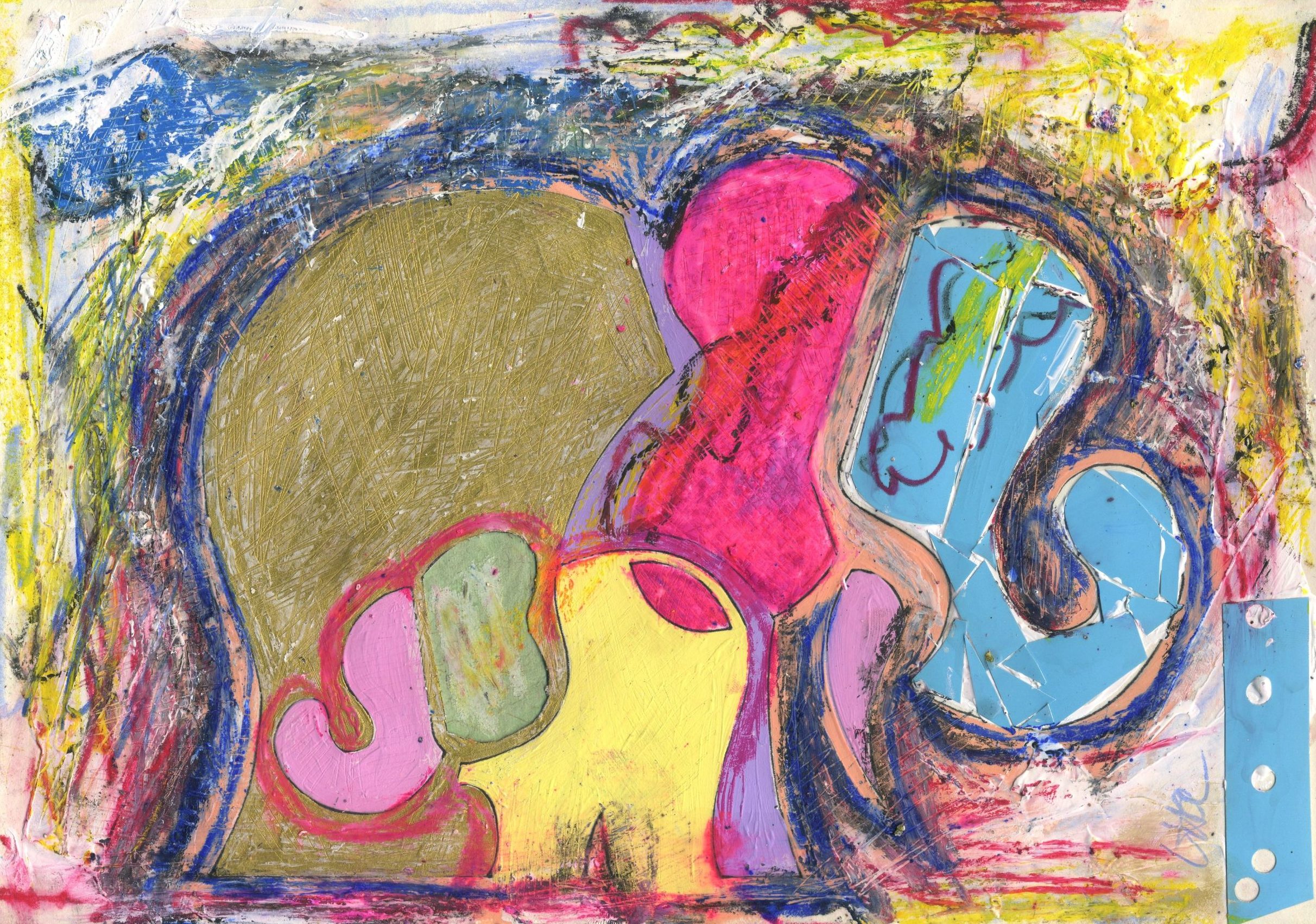
ELEPHANT WITH ITS MOTHER
Acrylic, wax, ballpoint pen, cardboard and plastic on cardboard In the early 2000s the artist experimented with a range of techniques, styles and materials to portray the elephant. One of the first works in this series, the elephant with its mother conveys a maternal tenderness that contrasts sharply with strong wax strokes and bold colours. The sheet is signed twice.
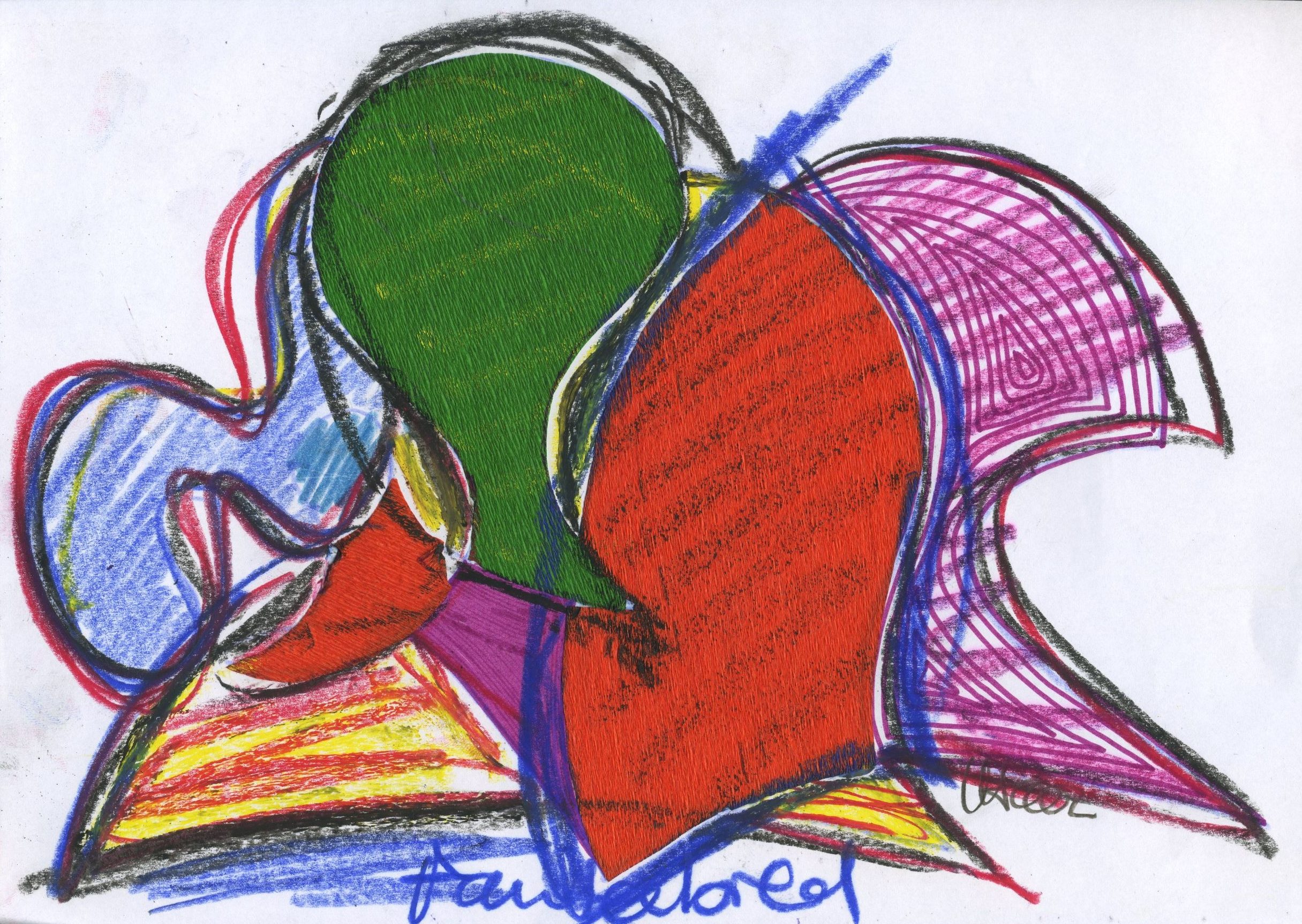
FANTENBILD
Wax, coloured pencil, tissue paper and felt-tip pen on paper In the early 2000s the artist experimented with a range of techniques, styles and materials to portray the elephant. The composition of a black silhouette breaking up into irregular fields shows an elephant in profile, in strong colours. Below the drawing is the word “Fantenbild”, the artist's signature and the date of creation. The work is also signed in pencil on the back.
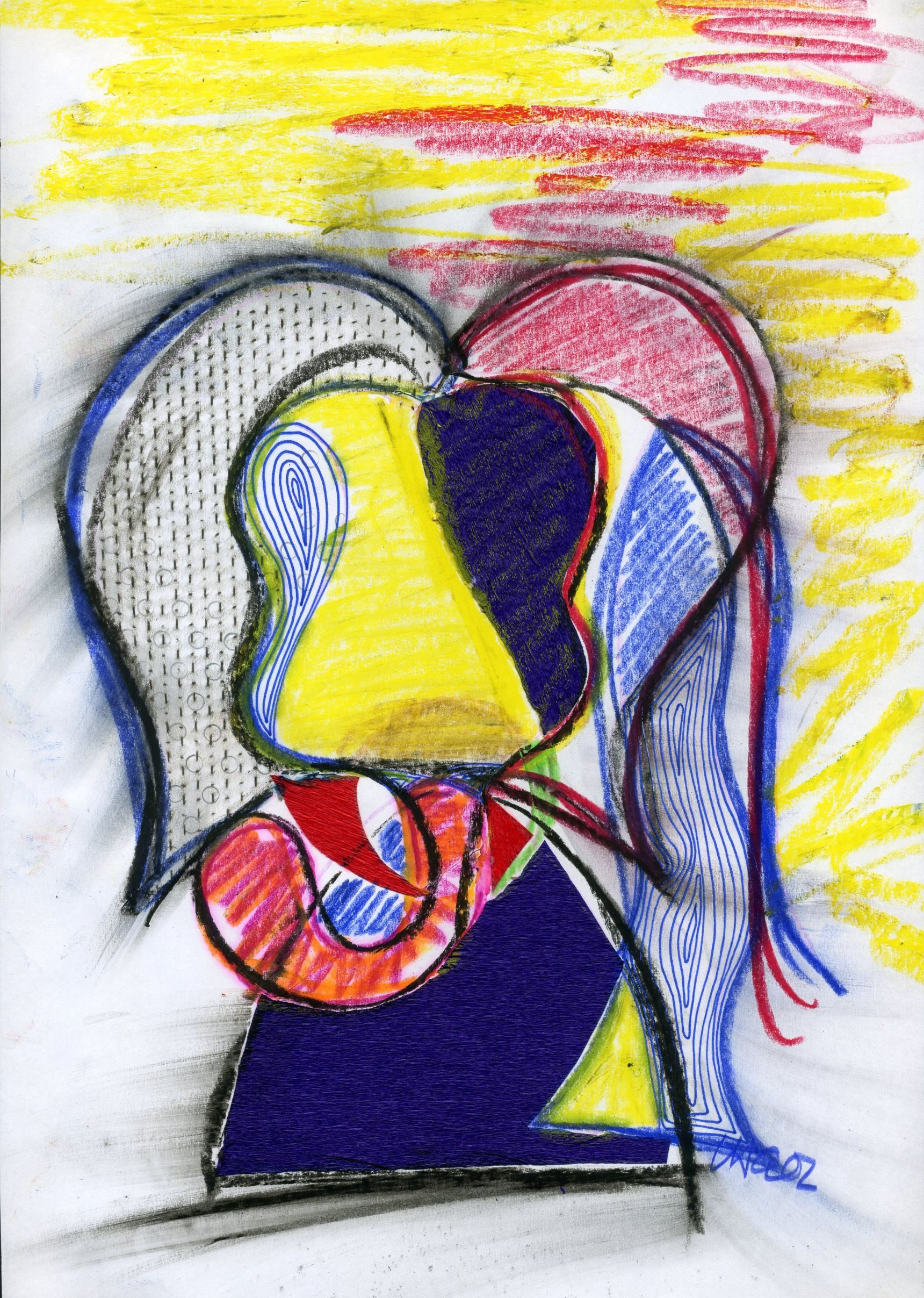
AFRICAN IMPRESSION
Wax, coloured pencil, felt-tip pen and crêpe paper on paper In the early 2000s the artist experimented with a range of techniques, styles and materials to portray the elephant. A black silhouette line, coloured in the same light way with strong colours, and collages of red and blue crêpe paper complete this elephant sketch. The work is signed on both sides of the sheet.
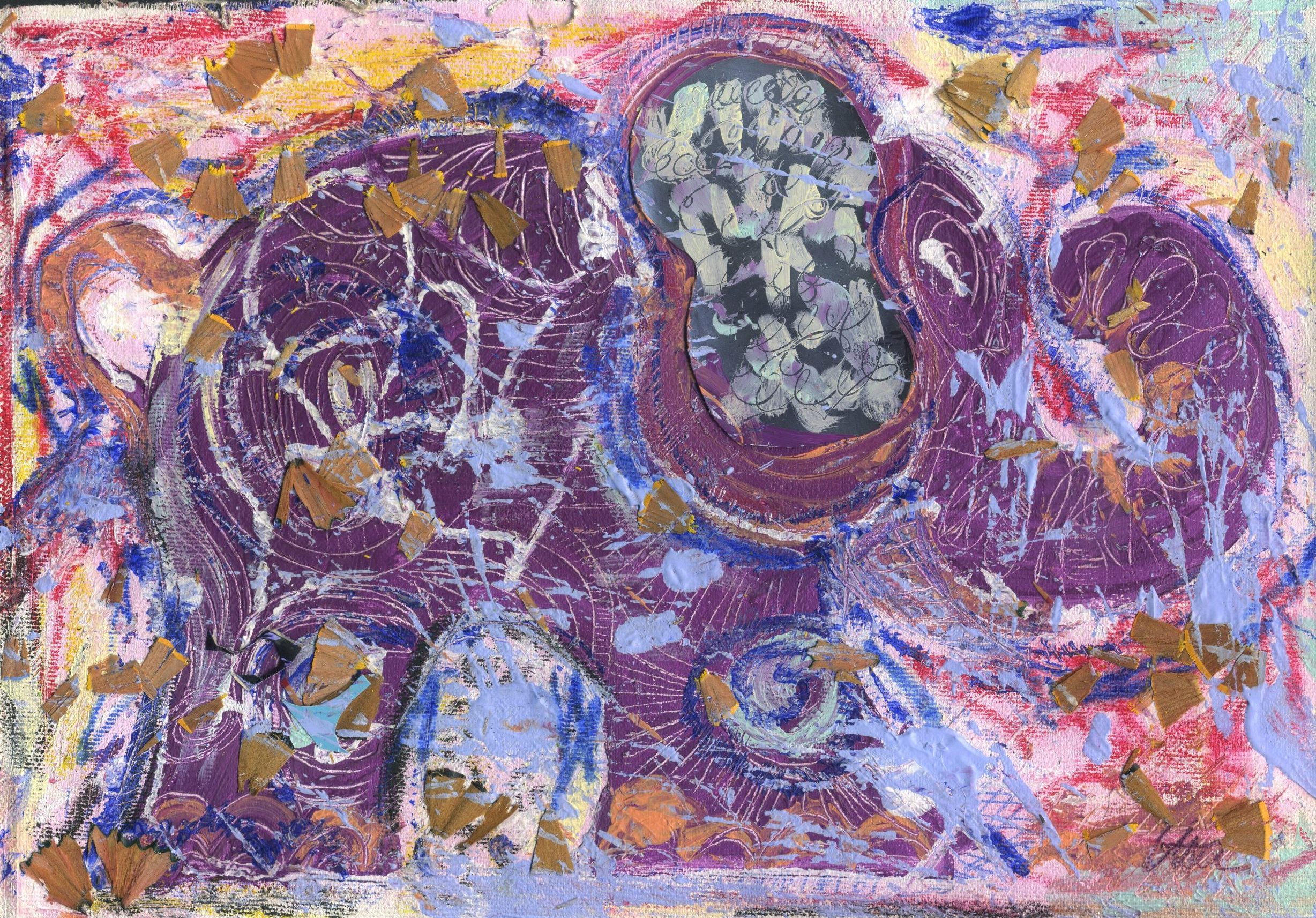
LILA ELEPHANT
Acrylic, wax, cardboard and wood on canvas In the early 2000s the artist experimented with a range of techniques, styles and materials to portray the elephant. On a piece of heavy canvas whose left side shows the frayed edge of the fabric, the artist paints a simple purple silhouette. The ear, a collage in glossy silver, stands out and forms the centre of this small work. The background is in wax. This canvas is signed twice.
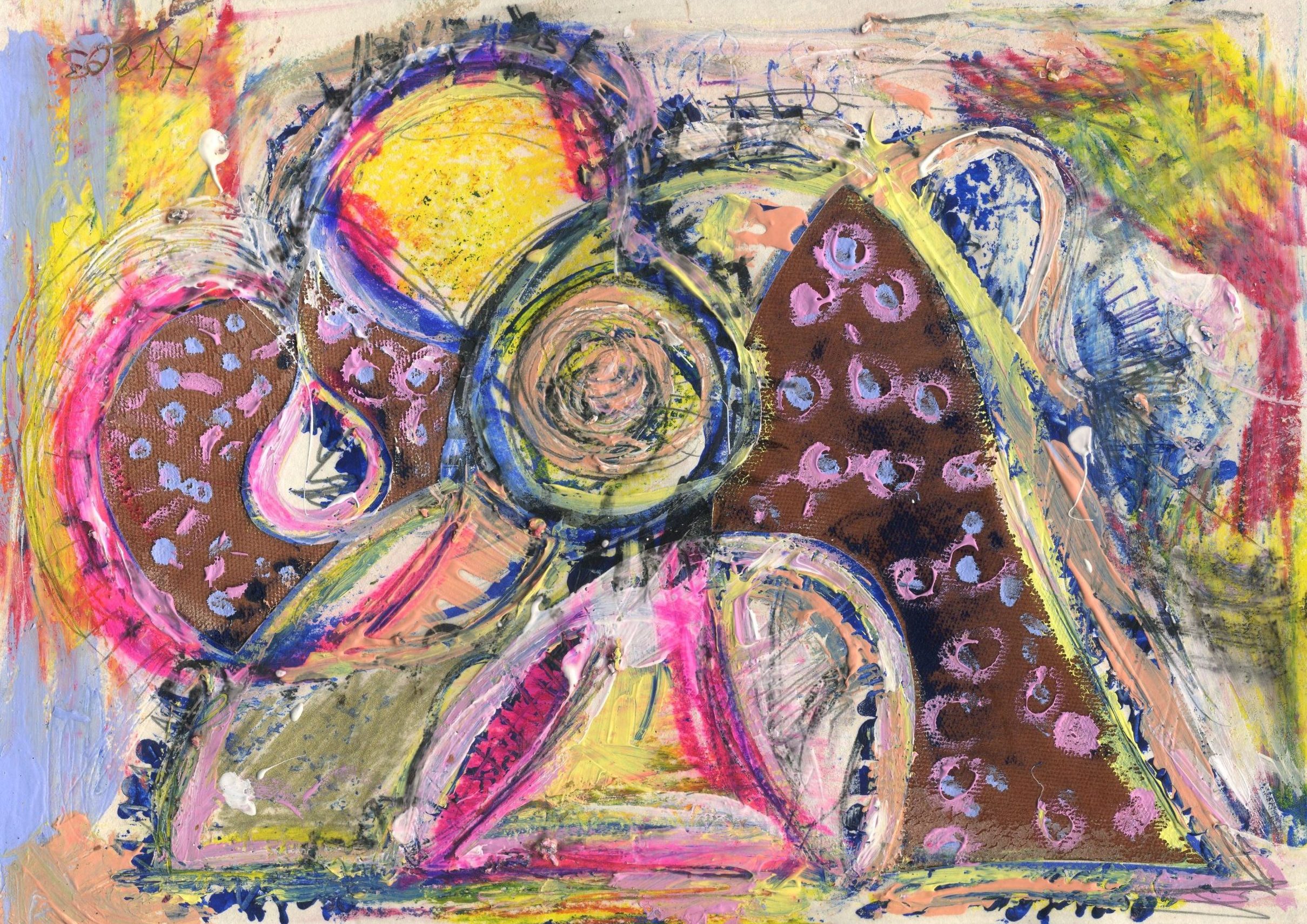
MAD LUCKY ELEPHANT
Acrylic, pencil, ballpoint pen, velvet and wax on cardboard In the early 2000s the artist experimented with a range of techniques, styles and materials to portray the elephant. An interpretation in bold pastel and neon tones. Both the restless background and the dynamically moving animal convey joy and freshness. The painter signed this sheet at the upper left and on the back.
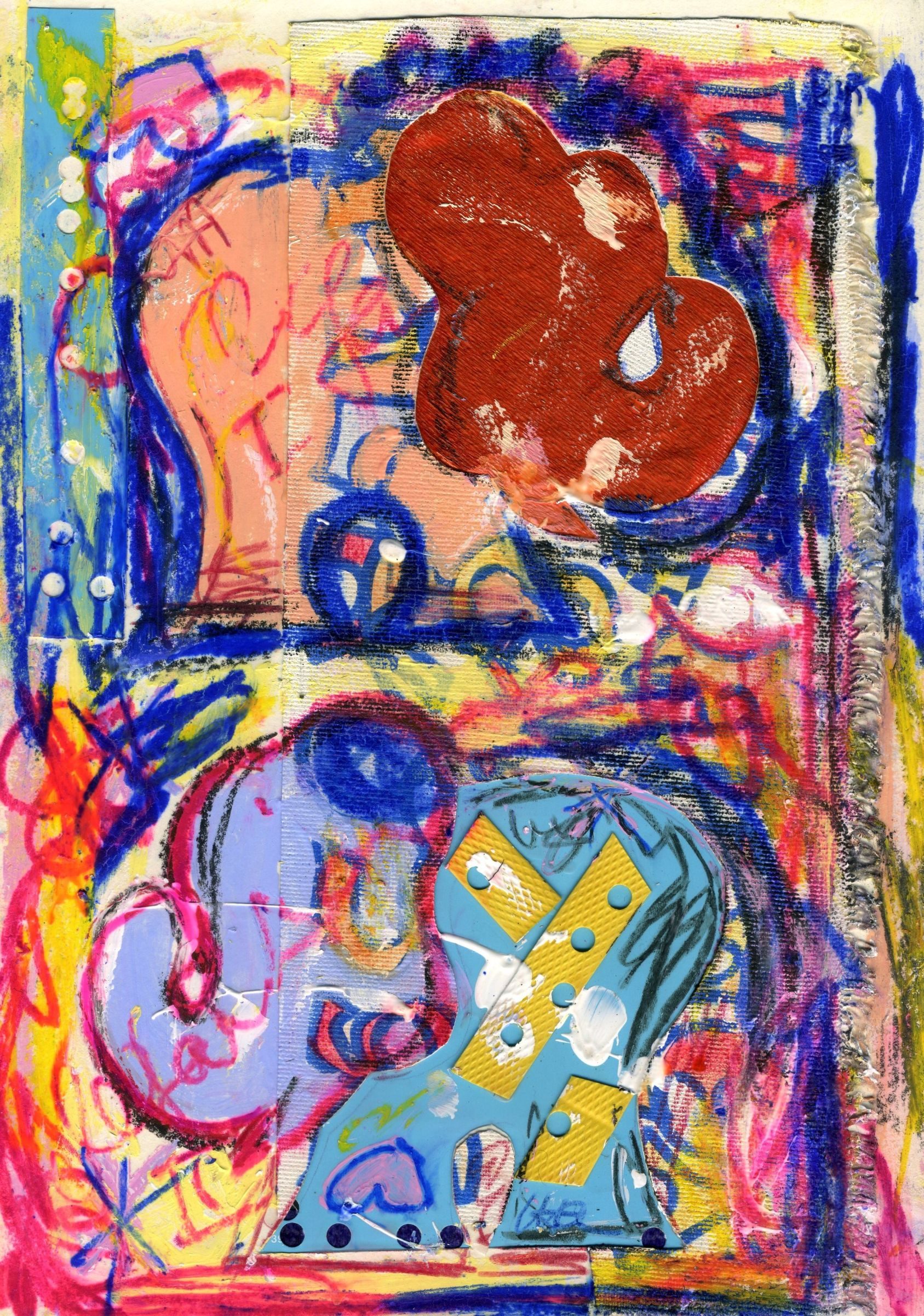
ELEPHANT COUPLE
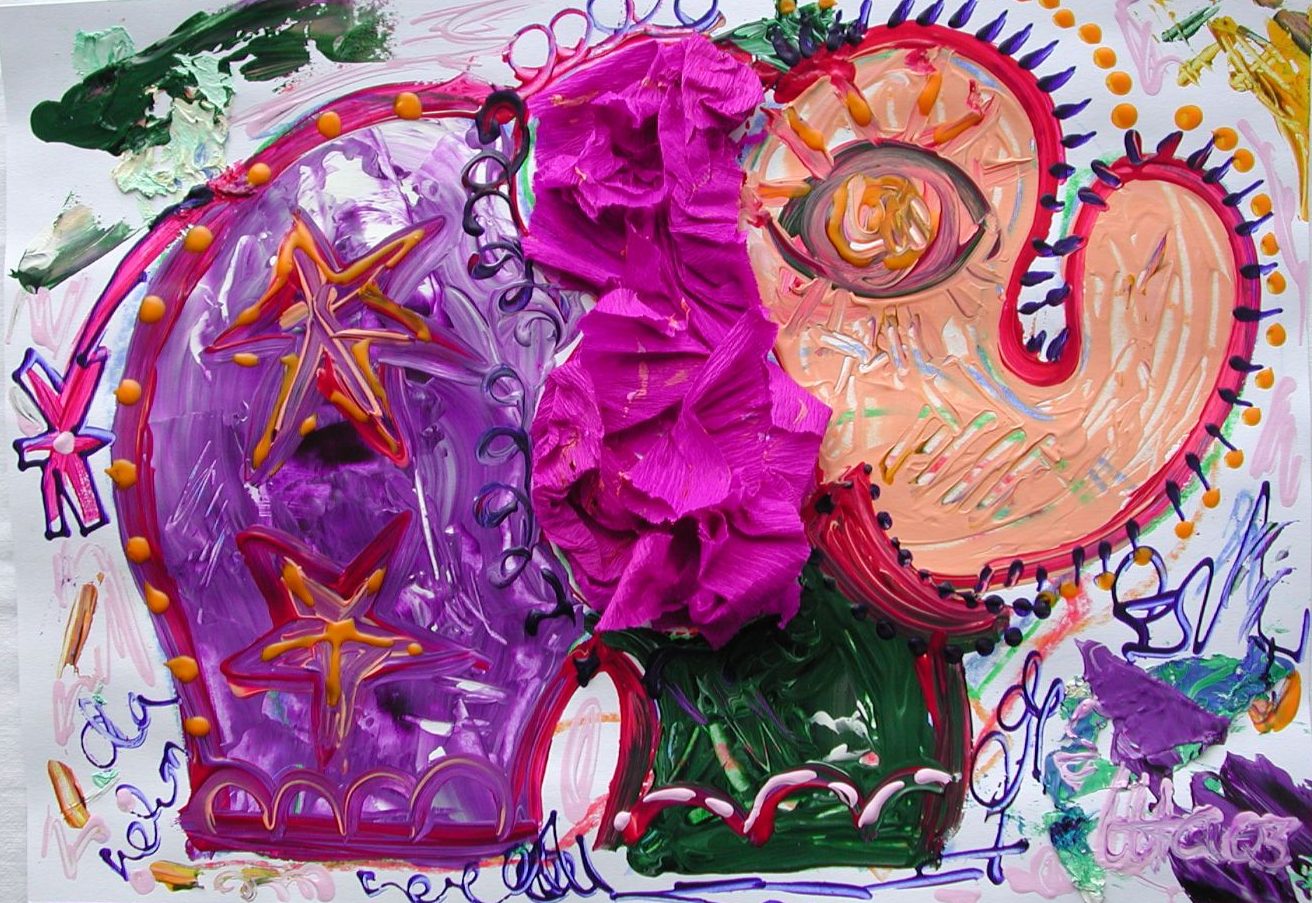
MIXED ELEPHANT
Acrylic and crêpe paper on cardboard In the early 2000s the artist experimented with a range of techniques, styles and materials to portray the elephant. In strong colours, Uta applies acrylic generously and completes the work with a collage of purple crêpe paper that gives shape and volume to the animal's large ear. Signed at the lower right and on the back of the cardboard.
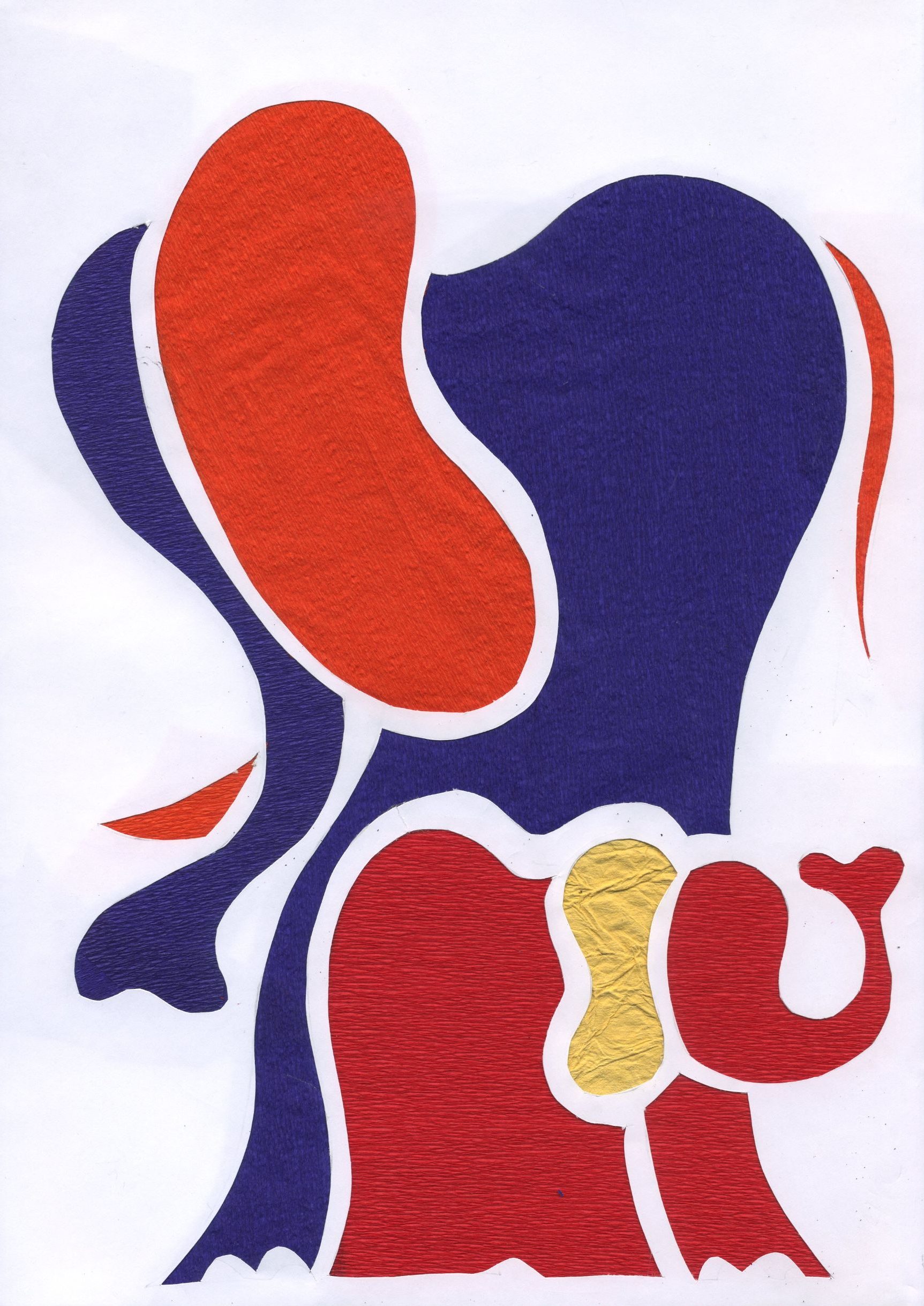
ELEPHANT SILHOUETTES
Paper, cardboard and crêpe paper In the early 2000s the artist experimented with a range of techniques, styles and materials to portray the elephant. The artist cuts out the silhouettes of an elephant and its calf and then makes a collage in which crêpe paper fills the cut-out areas. The work is signed on the back.
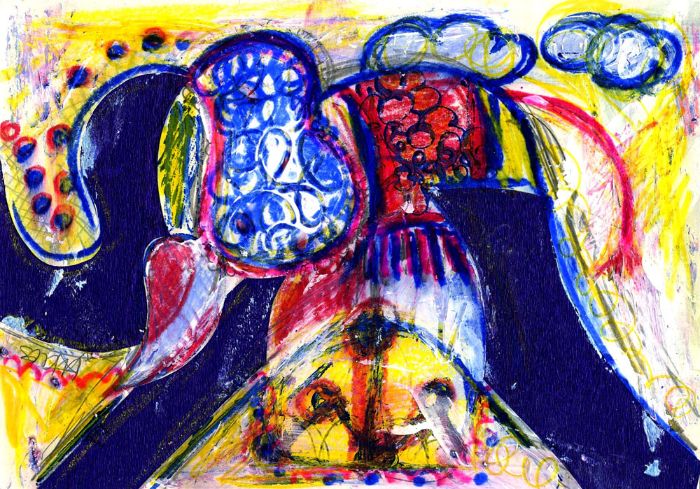
LUCK IN BLUE
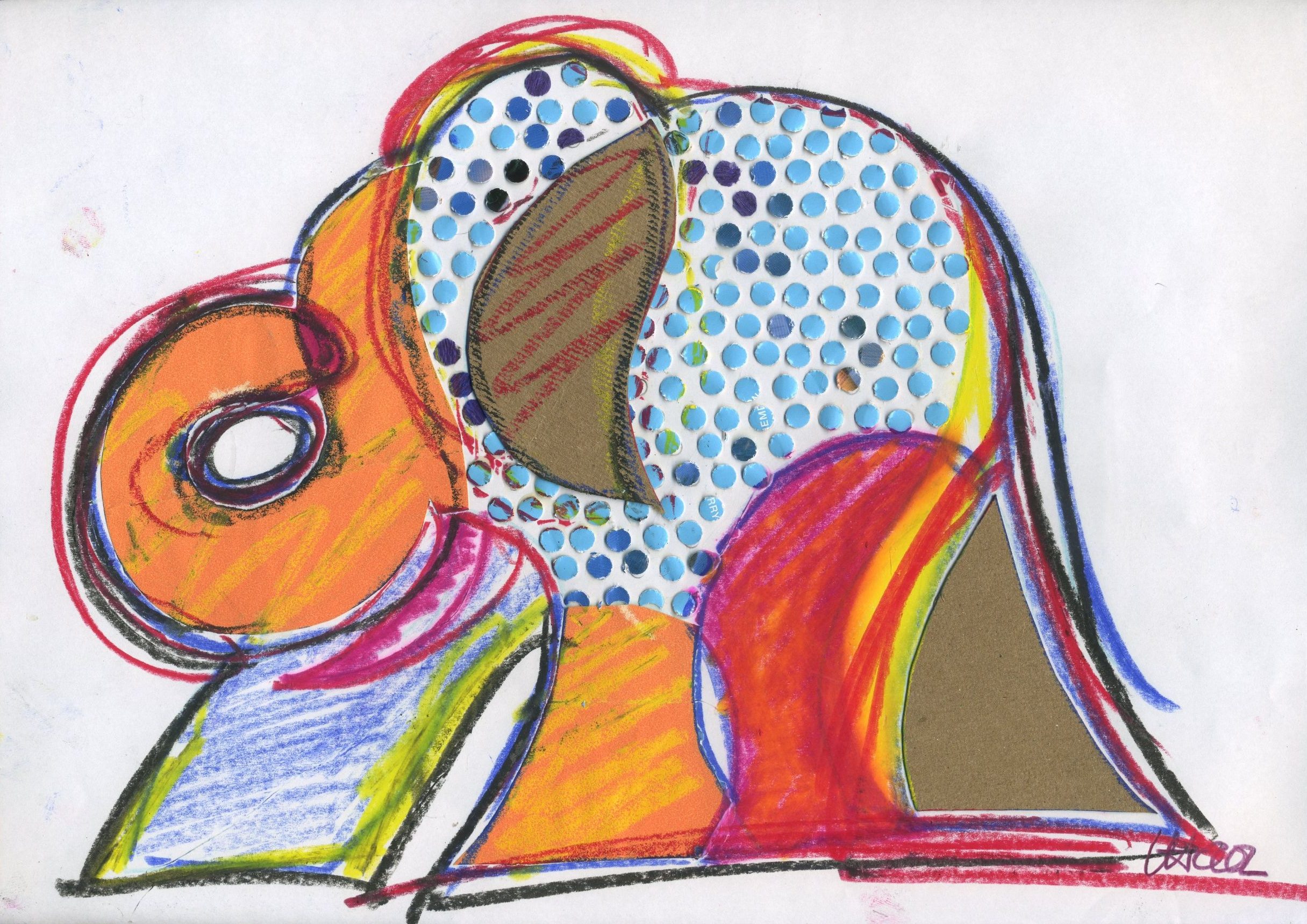
WHISE ELEPHANT
Wax, coloured pencil and cardboard on paper In the early 2000s the artist experimented with a range of techniques, styles and materials to portray the elephant. An elephant in rapid motion, without a coloured background, stands out on its own in orange and blue tones. A sober wax-and-collage composition from 2002. Signed twice.